ByJohn A
How Cognitive Systems Improve Decision Making
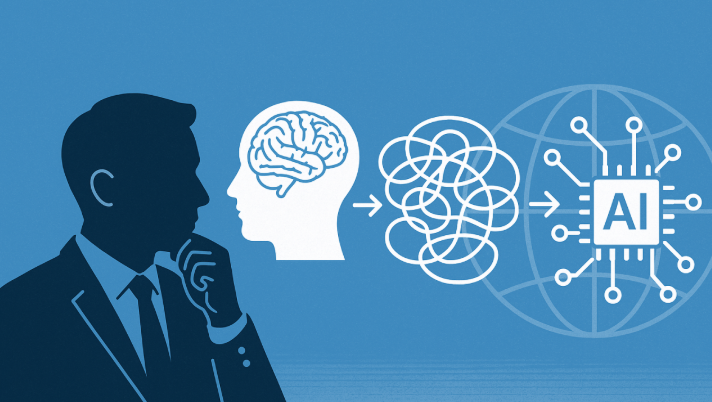
Cognitive systems structure decision processes around data, models, and governance. They surface uncertainty, quantify trade-offs, and present disciplined reasoning rather than prescriptive steps. By aligning analytics with risk standards, they enable scalable exploration and robust scenario testing. The result is actionable bets grounded in transparent assumptions and tracked drift. This approach preserves human autonomy while accelerating responsiveness, yet the implications and boundaries require careful scrutiny as organizations adopt these systems.
What Cognitive Systems Do for Decision Making
Cognitive systems influence decision making by supplying structured, data-driven support that complements human judgment. They model uncertainty, surface patterns, and test scenarios, enabling disciplined evaluation without surrendering autonomy. Through data governance and risk management practices, these systems align insights with standards, monitor integrity, and mitigate bias. The result is transparent reasoning that supports deliberate, scalable choices, preserving freedom while reinforcing accountability in complex environments.
See also: cookape
How They Turn Data Deluge Into Insightful Bets
The flood of data from diverse sources imposes complexity on decision processes, but cognitive systems convert this abundance into actionable bets by structuring signals, quantifying uncertainty, and testing outcomes under defined constraints.
Through disciplined data governance, they align inputs with intent, produce transparent models, and support outcome forecasting, enabling disciplined experimentation, robust risk appraisal, and scalable, freedom-friendly decision acceleration across domains.
Evaluating Trade-Offs With Probabilistic Reasoning
Evaluating trade-offs with probabilistic reasoning reframes decisions as explicit balances among uncertain outcomes. The approach formalizes uncertainty modeling to quantify trade-offs, enabling transparent comparison across options. Decision-makers assess how distributions, confidences, and dependencies influence outcomes, while risk framing clarifies perceived threats and opportunities. This systemic view supports disciplined choice, balancing flexibility with robustness in complex, dynamic environments.
Real-World Strategies to Adopt and Scale Cognitive Systems
How can organizations translate cognitive capabilities into scalable, repeatable gains in decision quality? Real-world adoption hinges on modular architectures, disciplined data provenance, and rigorous model governance. Systems-oriented teams export repeatable templates, monitor drift, and codify decision criteria.
Scale emerges from interoperability, clear ownership, and continuous feedback loops that align data, models, and human judgment across domains. Liberty comes through transparent, responsible deployment.
Frequently Asked Questions
How Do Cognitive Systems Learn From Limited Data?
Cognitive systems learn from limited data through learning limits and cautious generalization, leveraging data augmentation to expand effective samples. They adopt analytical, model-driven approaches, emphasizing systems-oriented reasoning to preserve autonomy and support freedom while maintaining robustness.
What Are the Limits of Probabilistic Reasoning in Decisions?
Despite probabilistic reasoning, limits arise as uncertainty boundaries tighten; even with 95% confidence, a single miscalibration skews outcomes. The system exhibits probabilistic humility, balancing data-driven insight with caution in decision loops and planning under ambiguity.
Can Cognitive Systems Explain Their Recommendations Clearly?
Cognitive systems can offer clear explanations and user facing transparency, but struggle at times due to model complexity. They provide analyzable rationales, ensure traceability, and balance openness with safety, yet maintain constraints that protect operational integrity and autonomy.
How to Measure ROI From Cognitive System Deployments?
ROI measurement for cognitive system deployments hinges on deployment metrics, with defined baselines, governance, and tracking of operational uplift, efficiency, and decision accuracy, while accounting for latency, reliability, and risk-adjusted value within a systems-oriented, freedom-seeking perspective.
What Governance Ensures Ethical AI Decision Support?
“Actions speak louder than words.” Governance frameworks establish oversight, while ethical risk management codifies responsibilities; they guide decision support systems, ensuring transparency, accountability, and fairness, with rigorous auditing, continuous monitoring, and adaptive controls for freedom-respecting, model-driven implementation.
Conclusion
Cognitive systems reshape decision making by translating data into disciplined bets, balancing uncertainty with transparent reasoning and governance-aligned controls. They enable scalable exploration of scenarios, quantify trade-offs, and monitor drift to sustain alignment with intent. An illustrative case: a manufacturer uses probabilistic forecasting to optimize supply and pricing; when demand deviates, the system flags likely causes, recalibrates scenarios, and preserves autonomy by offering recommended courses rather than commands. This disciplined, model-driven approach enhances resilience and accountability across domains.